In short
When production breaks, panic spreads fast: ten people in one chat, all running commands, nobody telling customers anything. A simple incident process turns that chaos into calm, clear steps.
A structured process for detecting, responding to, and resolving production incidents — clear roles (incident commander), communication channels, and a calm, checklist-driven approach beat improvised panic.
Think of it like this
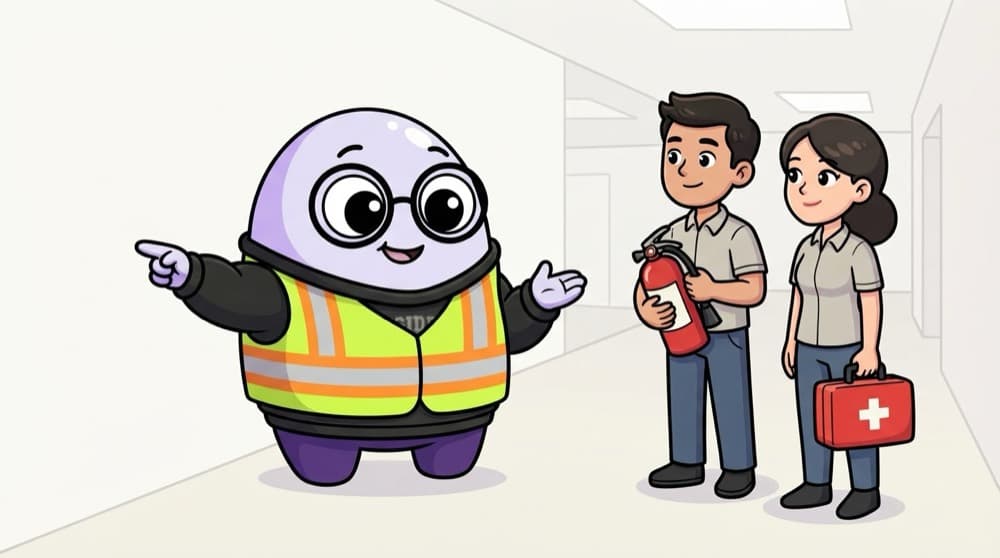
The fire drill
In a fire drill, one warden takes charge, one person grabs the extinguisher, another handles first aid, and everyone else follows the plan. Nobody argues about who leads. Incident response gives your team the same roles before the alarm ever rings.
Watch it happen
The life of an incident
1/5An alert fires or a user reports a problem. Someone declares an incident and opens a dedicated channel.
The big ideas
What you need to know
One commander
The incident commander coordinates and decides, but doesn't debug. Others do the hands-on work.
Mitigate before you diagnose
If the last deploy might be the cause, roll it back now. Investigate once users are safe.
Communicate on a schedule
Post status updates at fixed times, even if the update is 'still investigating'. Silence breeds panic.
Blameless reviews
Ask what in the system allowed the mistake, not who made it. People share more when they aren't afraid.
See it in code
Walk through the code
1[INC-142] Checkout errors · SEV-2 · Investigating2Impact: ~15% of checkouts failing since 10:40 IST3IC: Riya Ops lead: Aman Comms: Neha4Now: rolled back api v2.3 -> v2.2, watching error rate5Next update: 11:15 IST1/4An ID, a short title, the severity and the current state.
A status update template for the incident channel. Short, factual and timestamped, so anyone joining late can catch up in ten seconds.
Save yourself the pain
Common mistakes
Oops
Everyone jumping in and running fixes at the same time.
Do this instead
Let the commander assign work. Parallel, uncoordinated changes make it impossible to know what helped.
Oops
Writing a postmortem that says 'human error' and stopping there.
Do this instead
Ask why the system let one mistake cause an outage. Add guardrails, tests or automation as action items.
Your mission
Run a tabletop drill
Quick check
Ten minutes into an incident, the team suspects the last deploy. What's usually the best next step?
Go deeper
- 1Read a public incident response framework (many companies publish theirs).
- 2Learn the role of an incident commander and why one clear owner matters during a live incident.
- 3Draft a basic incident response checklist: detect, communicate, mitigate, resolve, review.
More topics at this stop
 Monitoring vs Observability
 Metrics, Logs & Traces (The 3 Pillars)
 Prometheus Fundamentals
 Grafana Dashboards
 The ELK / EFK Stack
 Distributed Tracing (Jaeger, OpenTelemetry)
 Alerting Best Practices
 SLIs, SLOs & Error Budgets

Stuck on this topic? Ask an Insider
Get 1:1 guidance from people who've walked this exact path — on the InsideEdge app.
