In short
Messages in a chat, products in a cart, rows in a table: they're all lists. Arrays hold ordered lists, and their built-in methods save you from writing loops by hand.
Ordered, index-based collections with a rich built-in method set (`map`, `filter`, `reduce`, etc.) that's essential for everyday data transformation in JS. Arrays are frequently combined with higher-order methods to transform, search, group, validate, and aggregate application data without manually managing indexes.

Think of it like this
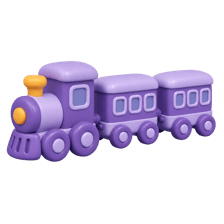
Coaches on a train
A train is coaches in a fixed order. You can attach one at the end or detach the last one. In arrays the counting starts at 0, so the engine-side first coach is coach 0. Weird for a train, normal for programmers.
Watch it happen
filter, map and reduce on marks
1/6marks has 4 items at indexes 0 to 3. marks.at(-1) is the last one, 60.
The big ideas
What you need to know
Index starts at 0
The first item is arr[0] and the last is arr[arr.length - 1], or simply arr.at(-1).
Some methods change the array
push, pop, shift, unshift, splice and sort change the original array in place.
Some return a new one
map, filter, slice, toSorted and toReversed leave the original alone. React code relies on this a lot.
Finding things
includes checks if a value exists, find returns the first match, some and every answer yes or no.
See it in code
Walk through the code
1const marks = [72, 88, 95, 60];2 3console.log(marks[0]); // 724console.log(marks.at(-1)); // 60 (last item)5 6const passed = marks.filter((m) => m >= 70); // [72, 88, 95]7const withGrace = marks.map((m) => m + 5); // [77, 93, 100, 65]8const total = marks.reduce((sum, m) => sum + m, 0); // 3159 10console.log(marks.includes(95)); // true11console.log(marks.toSorted((a, b) => a - b)); // [60, 72, 88, 95]12console.log(marks); // [72, 88, 95, 60], unchanged1/4Index 0 is the first mark. at(-1) counts from the end.
reduce walks the array carrying a running value, here sum, which starts at 0. toSorted gives a sorted copy without touching marks.
Save yourself the pain
Common mistakes
Oops
Calling [10, 9, 1].sort() and expecting [1, 9, 10].
Do this instead
Default sort compares as text and gives [1, 10, 9]. Pass a compare function: sort((a, b) => a - b).
Oops
Using map just to loop when you don't need the new array.
Do this instead
Use forEach or for...of for side effects. Use map only when you want the returned array.
Your mission
Class result sheet
Quick check
What does [10, 1, 5].sort() return?
Go deeper
- 1Rewrite a `for` loop that transforms data using `.map()` instead. Validate your understanding by applying it in a small practical example.
- 2Practice destructuring arrays and using the spread operator to copy/merge them. Test it with at least one normal case and one edge case so you can explain the behavior confidently.
- 3Learn `.find()`, `.some()` and `.every()` for common search patterns.
More topics at this stop
 Variables
 Datatypes
 Operators
 Functions
 Scope
 Hoisting
 Closures
 this keyword
 Objects
 Methods
 Loops
 DOM
 Events
 Promises
 Callbacks
 Async Await
 Modules
 Classes
 Prototype
 OOP
 Error Handling
 Debouncing
 Throttling
 Event Delegation
 Execution Context
 Call Stack
 Memory
 Garbage Collection
 ES6+
 Map
 Set
 WeakMap
 WeakSet
 Generators
 Iterators

Stuck on this topic? Ask an Insider
Get 1:1 guidance from people who've walked this exact path — on the InsideEdge app.
