Contextual Inquiry
Part of the Product Management Roadmap
In short
People can't tell you about habits they don't notice. When you watch them work in their real place, the sticky notes on the monitor and the side notebook tell you what interviews never will.
Observing users in their real environment as they naturally use a product — surfacing workarounds and friction that never come up in a sterile interview setting.
Think of it like this
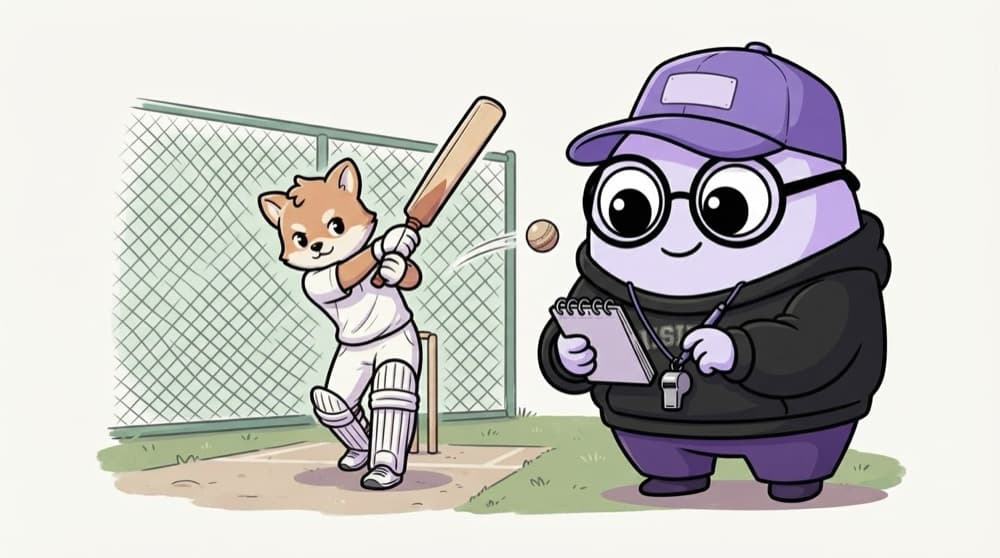
A coach in the nets
A cricket coach doesn't just ask 'how do you bat?'. They watch you in the nets and spot the dropped elbow you never knew about. Contextual inquiry means watching people in their own setting, then asking.
Watch it happen
A session at a chemist's shop
Just work as usual
1/5You explain you'll watch and ask a few questions, like an apprentice learning the job.
The big ideas
What you need to know
Go to their place
Visit where the work happens: the shop, the office, the hostel room. Context changes behaviour.
Be the apprentice
Act like someone learning their job. People explain more when they're teaching you.
Look for workarounds
Paper notes, spreadsheets on the side and sticky notes are signs the tool isn't doing its job.
Save yourself the pain
Common mistakes
Oops
Interrupting constantly with questions.
Do this instead
Watch first, ask at natural pauses. Let the real workflow happen.
Oops
Turning up without permission or a clear purpose.
Do this instead
Get consent, explain why you're there, and agree how long you'll stay and what you'll record.
Your mission
Observe someone at work
Quick check
What can contextual inquiry reveal that a normal interview often misses?
Go deeper
- 1Watch someone use an app in their actual context (not a lab setting) and note surprises.
- 2Learn why this method is especially powerful for B2B and workflow-heavy products.
- 3Compare what you observe to what the same user reports when asked directly.
More topics at this stop
 User Interviews
 Surveys & Questionnaires
 User Personas
 Jobs to Be Done (JTBD)
 Empathy Mapping
 Usability Testing
 Customer Journey Mapping
 Problem Validation
 Assumption Mapping
 Affinity Mapping & Research Synthesis
 Continuous Discovery Habits

Stuck on this topic? Ask an Insider
Get 1:1 guidance from people who've walked this exact path — on the InsideEdge app.
