
User Interviews
Part of the Product Management Roadmap
In short
Asking people 'would you use this?' gets you polite lies. Asking 'tell me about the last time you...' gets you the truth. That one switch is most of interviewing.
One-on-one conversations designed to understand a user's real behavior and motivations — done well by asking about past behavior, not hypothetical future preferences.
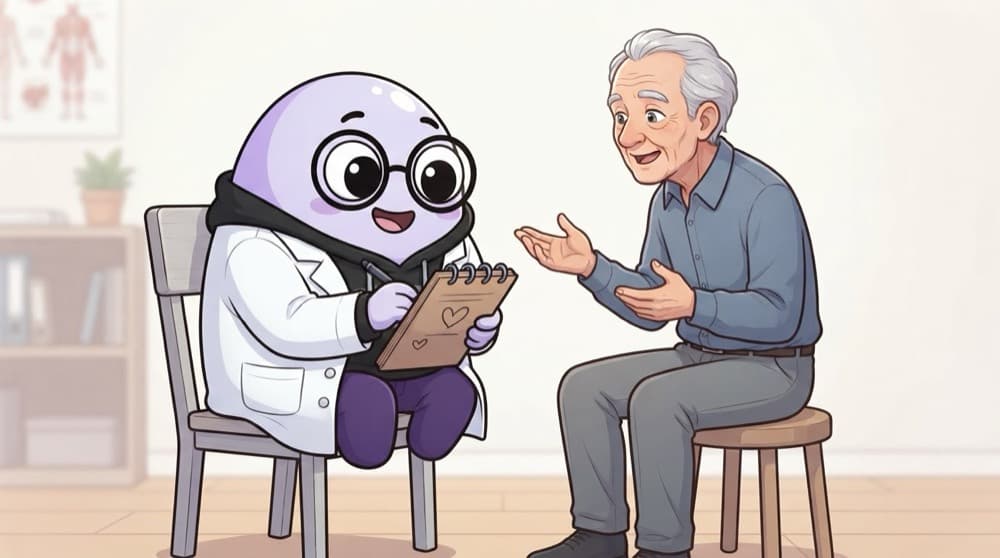
Think of it like this
A doctor taking your history
A good doctor doesn't ask 'would you like medicine?'. They ask when the pain started, what you ate, what you tried. Real past details lead to the right diagnosis. Interviews work the same way.
Watch it happen
Digging into a real story
Last time you paid rent?
1/6Start with a specific past event, not an opinion. Memories of real events are far more reliable.
The big ideas
What you need to know
Ask about the past
Past behaviour is evidence. 'Would you...' questions about the future get hopeful guesses.
Talk less, listen more
Aim for the participant speaking most of the time. Silence feels awkward but often brings the best details.
No leading questions
'Don't you find it annoying?' pushes an answer. 'How did that feel?' lets them decide.
A handful per group
A small number of interviews per user group, often 5 to 8, usually shows the main patterns. Stop when you hear repeats.
Save yourself the pain
Common mistakes
Oops
Pitching your idea and asking if they like it.
Do this instead
Keep your idea out of the interview. Learn about their problem first; test ideas separately.
Oops
Only interviewing friends who will be kind.
Do this instead
Recruit people who actually have the problem, ideally strangers. Friends soften the truth.
Your mission
Run one real interview
Quick check
Which question is most likely to give you reliable insight?
Go deeper
- 1Write 8-10 open-ended questions for a product you're curious about.
- 2Practice the 'five whys' technique to dig past a surface-level answer.
- 3Avoid leading questions like 'wouldn't it be great if...' — they bias the answer.
More topics at this stop
 Surveys & Questionnaires
 User Personas
 Jobs to Be Done (JTBD)
 Empathy Mapping
 Usability Testing
 Contextual Inquiry
 Customer Journey Mapping
 Problem Validation
 Assumption Mapping
 Affinity Mapping & Research Synthesis
 Continuous Discovery Habits

Stuck on this topic? Ask an Insider
Get 1:1 guidance from people who've walked this exact path — on the InsideEdge app.
