Checked vs Unchecked Exceptions
Part of the Java Roadmap
In short
Some failures are nobody's fault, like a missing file or a dropped network. Others are plain bugs. Java splits exceptions into these two families, and the compiler treats them very differently.
Checked exceptions (like IOException) must be caught or declared, while unchecked exceptions (subclasses of RuntimeException, like NullPointerException) usually signal programming bugs.
Think of it like this
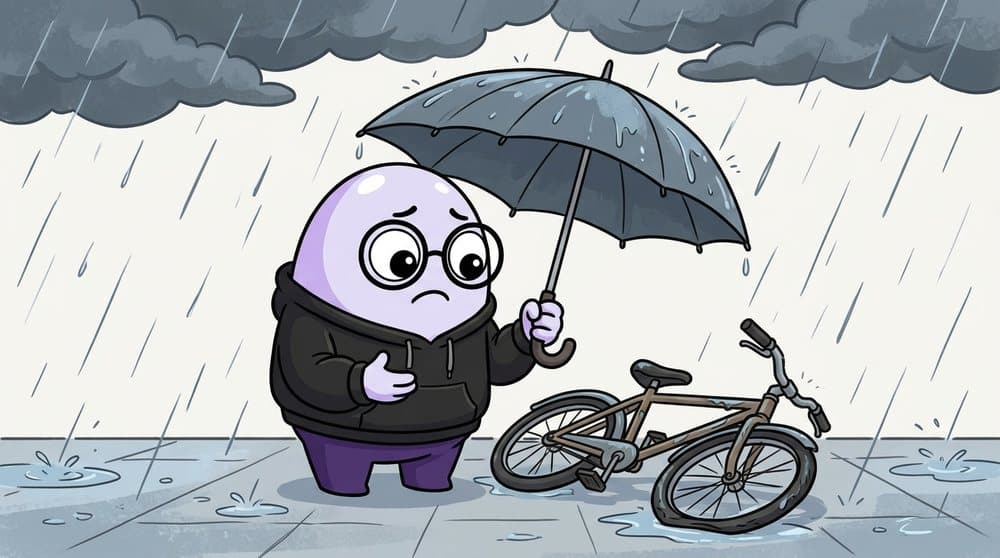
Rain vs a broken bicycle
Before leaving for college in Mumbai during the monsoon, your mother insists you carry an umbrella. Rain is expected and outside your control, so you must plan for it. That is a checked exception. A flat tyre because you never pumped it is your own mistake. Nobody makes you carry a repair kit for that; you just fix the habit. That is an unchecked exception.
Watch it happen
The Throwable family tree
1/4Everything you can throw extends Throwable.
The big ideas
What you need to know
Checked = catch or declare
For checked exceptions the compiler refuses to compile until you either catch them or add throws to the method signature.
Unchecked = usually a bug
NullPointerException, ArrayIndexOutOfBoundsException and IllegalArgumentException come from mistakes in code. Fix the cause instead of wrapping everything in try.
Errors are different again
OutOfMemoryError and StackOverflowError are Errors, not Exceptions. Your program usually cannot recover from them.
How to choose
If a careful caller could still hit the problem (file missing, server down), checked fits. If only a careless caller hits it (negative quantity), use unchecked.
See it in code
Walk through the code
1import java.io.IOException;2import java.nio.file.Files;3import java.nio.file.Path;4 5public class FeeReport {6 7 // Checked: the compiler forces callers to deal with IOException8 static String readFees(Path file) throws IOException {9 return Files.readString(file);10 }11 12 // Unchecked: a bad argument is the caller's bug, no throws needed13 static int perStudent(int totalFees, int students) {14 if (students <= 0) {15 throw new IllegalArgumentException("students must be positive");16 }17 return totalFees / students;18 }19 20 public static void main(String[] args) {21 try {22 System.out.println(readFees(Path.of("fees.txt")));23 } catch (IOException e) {24 System.out.println("Could not read fees file: " + e.getMessage());25 }26 System.out.println(perStudent(120000, 40));27 }28}1/4Files.readString can throw IOException, a checked exception, so the method must say throws IOException.
One checked and one unchecked exception side by side. Remove the try/catch around readFees and the code stops compiling. Remove nothing around perStudent and it still compiles.
Save yourself the pain
Common mistakes
Oops
Catching NullPointerException to hide it: try { name.length(); } catch (NullPointerException e) {}
Do this instead
Check for null or make sure the value is set. Unchecked exceptions are signals to fix the code, not to silence it.
Oops
Thinking unchecked means 'cannot be caught'.
Do this instead
You can catch any exception. Unchecked only means the compiler does not force you to.
Oops
Catching Throwable or Error in normal application code.
Do this instead
Catch the most specific Exception type you can actually handle. Errors like OutOfMemoryError should usually be left alone.
Your mission
Sort the exceptions
Quick check
Which of these is a checked exception?
Go deeper
- 1Draw the hierarchy: Throwable, Error, Exception and RuntimeException.
- 2Trigger three common unchecked exceptions and read their stack traces.
- 3Learn why the compiler forces you to handle checked exceptions.
More topics at this stop
 Try-Catch-Finally
 Try-with-Resources
 throw vs throws
 Custom Exceptions
 Reading & Writing Files (java.nio.file)
 Working with CSV Files
 Serialization Basics

Stuck on this topic? Ask an Insider
Get 1:1 guidance from people who've walked this exact path — on the InsideEdge app.
